
India is known for its incredible diversity in culture, religion, and traditions. Personal laws governing marriage, divorce, inheritance, and adoption often differ based on religious communities. The idea of a Uniform Civil Code has been discussed for decades as a way to bring consistency across these areas. This article explains the topic in easy language for everyone.
What is Uniform Civil Code?

Uniform Civil Code refers to a common set of laws that would apply to all citizens regardless of their religion, caste, or gender in matters of family and personal life. It aims to replace separate personal laws with one unified code covering marriage, divorce, succession, adoption, and maintenance. The Constitution of India mentions this goal under Article 44 as a directive principle that the state shall endeavor to secure for its citizens.
The debate around Uniform Civil Code has gained fresh momentum with recent state-level initiatives and national discussions.
Constitutional Background and History
When India became independent, the founders included Uniform Civil Code in the Directive Principles of State Policy. They believed it would promote national unity and equality. However, due to the sensitive nature of religious personal laws, successive governments moved cautiously.
Over the years, the Supreme Court has repeatedly urged the government to implement Uniform Civil Code through various judgments. Cases involving triple talaq, polygamy, and maintenance rights highlighted inconsistencies in existing personal laws. The court observed that a uniform law could strengthen secularism and gender justice.
Current Status in India
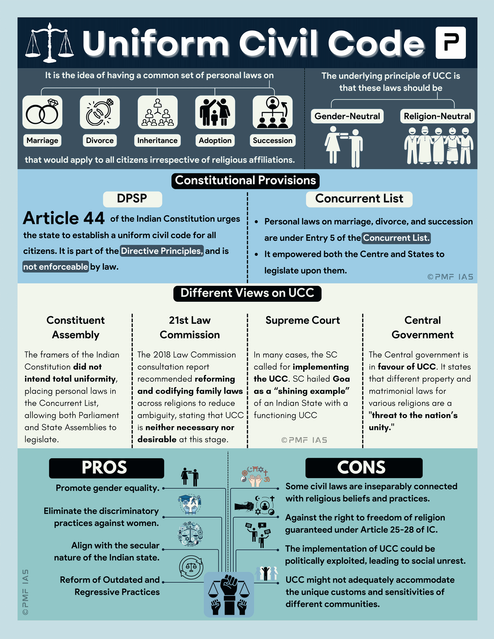
As of 2026, India does not have a nationwide Uniform Civil Code. However, some states have taken steps forward. Goa continues to follow a uniform civil code inherited from Portuguese times that applies to all communities with certain exceptions. Uttarakhand became the first state after independence to enact its own Uniform Civil Code in 2024. Other states like Madhya Pradesh have also shown interest with recent approvals of drafts.
These developments serve as testing grounds for what a national code might look like.
uniform civil code seeks to create equal rights and responsibilities for every Indian citizen in family matters, moving away from religion-specific rules.
Key Features Seen in Existing Models
The Uttarakhand Uniform Civil Code and Goa’s code provide useful insights:
- Mandatory registration of all marriages and live-in relationships.
- Uniform minimum age of marriage – 21 for men and 18 for women.
- Ban on polygamy and practices like nikah halala.
- Equal inheritance rights for sons and daughters.
- Provisions for maintenance and alimony that promote gender equality.
- Recognition of children born outside marriage with equal rights.
- Exemptions for certain tribal communities to protect their customs.
These provisions aim to simplify legal processes and reduce discrimination.
- Common benefits highlighted by supporters:
- Promotes gender equality by removing discriminatory practices.
- Simplifies legal system and reduces court burden.
- Strengthens national integration.
- Ensures equal treatment under law for all citizens.
Arguments in Favor of Uniform Civil Code
Many people support Uniform Civil Code because it aligns with the principle of equality before law. It could eliminate practices that disadvantage women, such as unequal inheritance or easy divorce options available only to men in some communities. A common code would make it easier for inter-faith couples and reduce confusion in property and custody matters.
Proponents argue that personal laws were often shaped in different historical contexts and may not suit modern democratic values. Implementing Uniform Civil Code would fulfill the constitutional vision and send a strong message of secularism. It could also help in curbing vote-bank politics based on religious divisions.
Concerns and Arguments Against

Critics worry that a Uniform Civil Code might threaten cultural and religious diversity. India’s strength lies in its pluralism, and imposing a single code could hurt the sentiments of minority communities. There are fears regarding implementation challenges in such a vast and diverse country.
Some argue that reforms should come from within communities rather than through state imposition. Others point out practical difficulties in drafting a code acceptable to all groups while respecting constitutional freedoms of religion. Tribal communities and northeastern states often seek exemptions to preserve their unique customs.
uniform civil code remains one of the most debated topics that touches upon secularism, equality, and federalism in India.
Impact on Women and Gender Justice
One of the strongest arguments for Uniform Civil Code centers on women’s rights. Many personal laws contain provisions that give unequal rights in marriage, divorce, and property. A uniform code could provide equal inheritance shares, better maintenance rights, and protection against arbitrary divorce. It might discourage child marriage and polygamy across all communities, leading to better social outcomes.
However, women’s groups themselves hold different views. Some see it as empowerment while others fear loss of community support systems during difficult times.
Challenges in Implementation
Creating and enforcing Uniform Civil Code involves several hurdles:
- Drafting a balanced law that respects diversity while ensuring equality.
- Addressing regional and cultural variations.
- Training judicial officers and updating court procedures.
- Managing resistance from religious leaders and political groups.
- Ensuring smooth transition for ongoing cases.
Gradual implementation through consultation and pilot projects in willing states is often suggested as a practical approach.
uniform civil code could simplify life for millions by providing clear, predictable rules instead of navigating multiple personal laws.
Role of Judiciary and Future Outlook
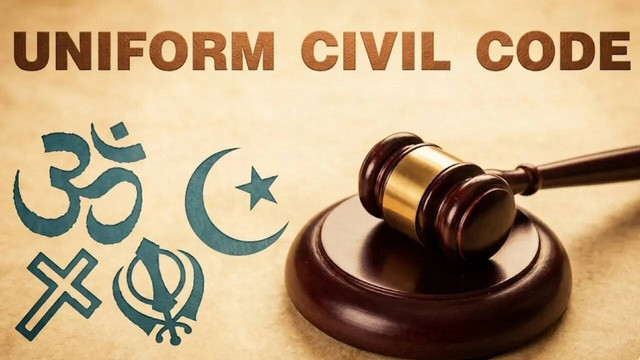
The Supreme Court has time and again highlighted the need for Uniform Civil Code but left the decision to the legislature. Recent state experiments will likely influence national policy. Public opinion, political will, and judicial guidance will shape the final form.
Many legal experts recommend a phased approach with wide consultations to build consensus. The focus should remain on justice and equality rather than mere uniformity.
- Practical tips for citizens:
- Stay informed about changes in family laws in your state.
- Consult lawyers for inter-faith or inter-caste matters.
- Support constructive dialogue on reforms.
- Understand your rights under existing laws in the meantime.
uniform civil code discussions reflect India’s ongoing journey to balance tradition with modernity in its legal framework.
Conclusion
Uniform Civil Code represents an important aspiration for equality and unity in a diverse nation like India. While the path forward involves addressing genuine concerns about diversity and implementation, the core idea of equal rights for all citizens remains powerful. State-level experiments in places like Uttarakhand and the long-standing model in Goa offer valuable lessons for the future.
As society evolves, laws must keep pace to protect the vulnerable and promote fairness. Whether through a national code or continued state initiatives, the conversation around Uniform Civil Code encourages deeper thinking about justice, secularism, and national identity. Every Indian has a stake in how this important issue develops, making informed awareness essential for meaningful participation in the democratic process.
✨ Read more :- 🔗 Understanding BNSS Bare Act: The New Face of Criminal...